

Are Subscription Coffee Services Worth It? 2026 Guide
Table of Contents
- How Subscription Coffee Services Actually Work
- Fresh Roasted Coffee Delivery Benefits: Why Roast Date Matters
- Coffee Subscription Cost Comparison: Subscription vs Retail
- How to Choose a Coffee Subscription That Fits Your Brewing Habits
- Customization, Variety, and Discovery in Coffee Subscriptions
- The Hidden Costs: Shipping Waste, Subscription Fatigue, and Cancellation Friction
- Subscription Coffee vs Local Roaster Loyalty Programs
- Conclusion
- Frequently Asked Questions
Last Updated: September 26, 2026
How Subscription Coffee Services Actually Work
Subscription coffee services are recurring delivery plans that send freshly roasted beans to your door on a schedule you choose. At Rhythm Industry Records Coffee Bar, we roast to order just hours before shipping, so every bag arrives near its peak. You pick a frequency, a roast style, and a grind, then the roastery ships on repeat.
Most people ask the same question before signing up: are subscription coffee services worth it? The answer depends on three things: how much coffee you drink, how much you care about roast date, and whether you value discovery over routine.
Most guides get this wrong: subscriptions aren't a discount play. You're paying for freshness, curation, and convenience, not a lower price per bag.
A subscription coffee plan typically works like this:
- You choose whole bean or pre-ground
- You set a shipping frequency
- The roaster roasts and ships within days
- Automated billing renews each cycle
- You can pause, skip, or cancel
The freshness window matters more than most people realize: coffee starts losing character within weeks of roasting, not months.
Fresh Roasted Coffee Delivery Benefits: Why Roast Date Matters
Fresh roasted coffee delivery benefits come down to one number: the roast date. Beans hit their best flavor a few days to a few weeks after roasting, then oxidation slowly flattens the tasting notes you paid for.
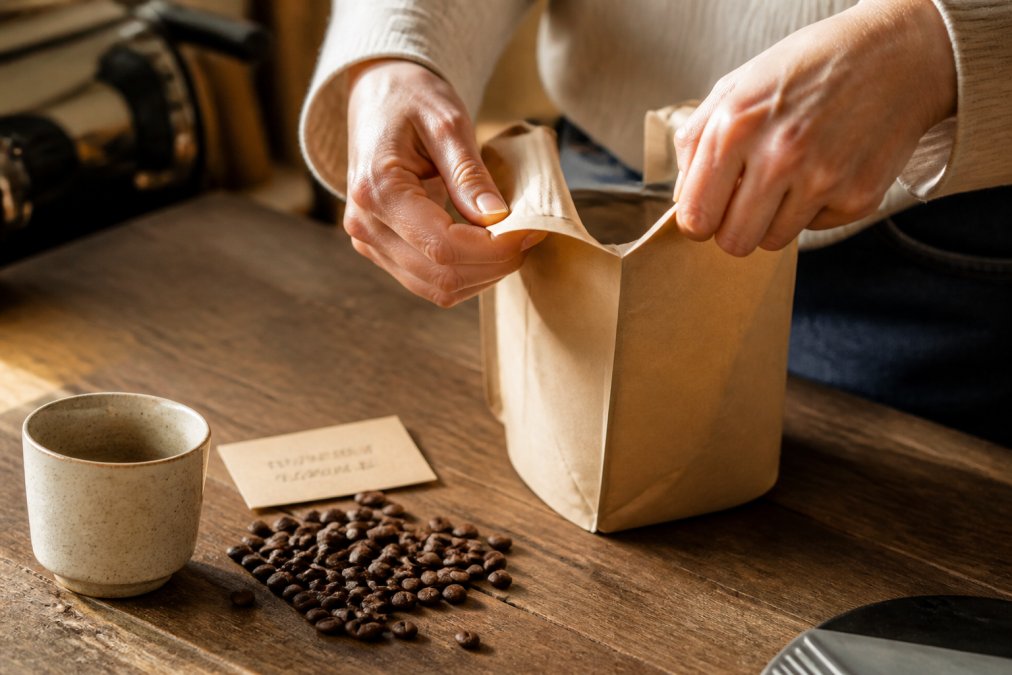
Grocery shelves work against you: a supermarket bag may sit in a warehouse, then a distribution center, then a store shelf, so by the time you brew it the roast date is often months old.
Why roast-to-order helps:
- Shorter time between roast and brew
- Better aroma and flavor character
- More control over grind size and brewing method
- Clear roast date on the bag
"Best by" labels don't tell you when the coffee was roasted. That's the trap. A roast date does.
A common mistake is buying a big bag to save money, then drinking stale coffee for the last two weeks.
Coffee Subscription Cost Comparison: Subscription vs Retail
A coffee subscription cost comparison rarely favors subscriptions on sticker price alone. Retail bags can look cheaper, but cost per cup tells a different story, and so does the cost of coffee you never drink.
Here's the trade-off in plain terms:
| Factor | Subscription | Retail Shelf |
|---|---|---|
| Freshness | Roasted to order | Often months old |
| Cost per cup | Higher upfront, fresher | Lower upfront, variable |
| Variety | Curated selection | Whatever is stocked |
| Convenience | Recurring delivery | You go get it |
| Waste | Shipping materials | Store packaging |
Run the numbers before you subscribe
Monthly coffee need (grams) = daily cups × grams per cup × days per month
- 2 cups × 12 g = 24 g per day
- 24 g × 30 days = 720 g per month
- A 340 g (12 oz) bag lasts about 14 days
The cost nobody puts on the label
Stale coffee is a hidden cost. Buy a 1 kg bag to save per-gram and drink 720 g a month, and the last 280 g sits for weeks until the flavor flattens. You paid for coffee you didn't enjoy, a worse deal than paying a little more per bag for fresh beans.
What to compare, line by line
When comparing a subscription to your retail habit, put these on the same page:
- Price per gram, not price per bag
- Shipping cost per delivery, or whether it's included
- Roast date on arrival, not just "best by"
- Waste rate, how much you throw out or leave stale
- Trip cost, time, gas, or delivery fees for restocking
How to Choose a Coffee Subscription That Fits Your Brewing Habits
Work through these steps:
- Count your daily cups. Two cups a day is roughly one bag every two weeks.
- Match the grind to your brewer. Whole bean for espresso, pre-ground for drip if you want speed.
- Pick a frequency you'll actually finish. Running out is annoying. Wasting beans is worse.
- Start with a sampler pack. It's the cheapest way to find your flavor profile.
- Check the cancellation policy before you commit.
Coming from a grocery brand, expect an adjustment: fresh beans often need a slightly coarser grind and less brew time, and your old settings may taste bitter at first.
Customization, Variety, and Discovery in Coffee Subscriptions
Customization is where subscriptions pull ahead of a fixed retail shelf: dial in roast level, origin, and grind, then change it whenever you want.
What to look for:
- Roast level options, from light to dark
- Single-origin and blend choices
- Sampler packs for blind tasting
- Mushroom coffee blends for something different
- Grind options for every brewing method
The Hidden Costs: Shipping Waste, Subscription Fatigue, and Cancellation Friction
Two costs rarely make the sales page: waste and friction. Both decide whether a subscription coffee plan is worth keeping, and most guides skip them entirely.
The shipping footprint nobody calculates
Every recurring delivery means a box, a mailer, and often a plastic valve bag, a stack of packaging over a year. The bigger question is how often those small shipments travel.
- Choose a frequency that matches consumption. Fewer, fuller shipments beat many small ones.
- Ask about packaging. Some roasters use recyclable mailers and compostable bags. Others don't.
- Consolidate. If you drink two bags a month, a single two-bag shipment may use less material than two separate ones.
- Check local pickup. Some roasteries let you collect in person, which removes shipping entirely.
Subscription fatigue: when deliveries outpace your drinking
Subscription fatigue is the quieter problem. After a few months, deliveries pile up faster than you drink them. You forget to skip. You pay for coffee you didn't need.
Cancellation friction: the test to run before you pay
Cancellation friction is the third trap. Some services make you email support or call to cancel; others bury the button. A plan you can pause in two clicks beats a slightly cheaper one you're stuck in.
Before you subscribe, run this five-minute test:
- Find the cancel button. Log in to your account page. Can you see it without searching help docs?
- Check for a pause option. Pausing is often more useful than canceling, you keep your rate and skip a cycle.
- Read the fine print. Look for restocking fees, return windows, or minimum commitments.
- Test the skip flow. If you can't skip a shipment in under a minute, you'll forget to.
- Note the notice period. Some plans require cancellation days before the next billing date.
Watch for these costs:
- Packaging you can't recycle
- Frequencies that outpace your drinking
- Hard-to-find cancel buttons
- Restocking or return fees
- Minimum subscription terms
Subscription Coffee vs Local Roaster Loyalty Programs
A local roaster loyalty program and a subscription coffee plan solve different problems. The local option wins on smell and immediacy: you walk in, smell the beans, and buy that day.
Here's how they compare:
| Factor | Subscription | Local Loyalty Program |
|---|---|---|
| Freshness | Roasted to order | Fresh, but varies |
| Variety | Broad, rotating | Limited to shop stock |
| Convenience | Delivered | You travel to it |
| Cost per cup | Depends on shipping | No shipping |
| Discovery | Curated for you | Whatever's on the shelf |
Conclusion
The real challenge with coffee subscriptions isn't finding one. It's matching the plan to how you actually drink. Get the frequency, grind, and roast right, and the freshness pays off in every cup.
Frequently Asked Questions
How much does a typical coffee subscription cost per month?
Pricing depends on the roaster, bag size, shipping frequency, and whether you choose single-origin or blends. Most services structure plans around a per-bag rate plus delivery, with discounts for larger bags or longer commitments. Rhythm Industry Records Coffee Bar does not publish fixed monthly rates because pricing depends on quantity, dates, and delivery, so check their website for current prices. When comparing, divide the total monthly cost by the number of cups you brew to see the real cost per cup.
Do subscription coffee services actually save you money?
They can, but only if you drink enough coffee to avoid waste and you compare fairly. Subscriptions often beat cafe prices per cup, and roast-to-order models protect flavor so you waste less. Against bulk supermarket beans, a subscription usually costs more per bag but delivers fresher coffee with a known roast date. Run a cost per cup comparison using your actual consumption rate before deciding whether subscription coffee is worth it for your budget.
How do I know if a coffee subscription is right for my brewing habits?
Match the plan to how much you brew and how you brew it. A pour-over drinker going through 250g a week needs a different shipping frequency than someone pulling two espressos on weekends. Choose a service that lets you set delivery intervals, pick whole bean or pre-ground, and adjust grind size for your brewing method. If you like variety, look for curated selection or sampler packs rather than a fixed single-origin repeat.
Can you cancel coffee subscriptions easily?
Cancellation policies vary widely, and this is where subscription fatigue sets in for many buyers. Before signing up, read the cancellation policy, check whether you can pause instead of cancel, and confirm there are no minimum commitment periods. A flexible plan lets you skip a month when your cupboard is full. If a provider hides cancellation behind a phone call or email request, treat that as a warning sign and look for one with self-serve account management.
Get started with Rhythm Industry Records Coffee Bar and taste what roast-to-order care does for your morning.